

Stuck on Social Housing Lists in the Netherlands? What Now
The Frustrating Reality of Waiting for Social Housing
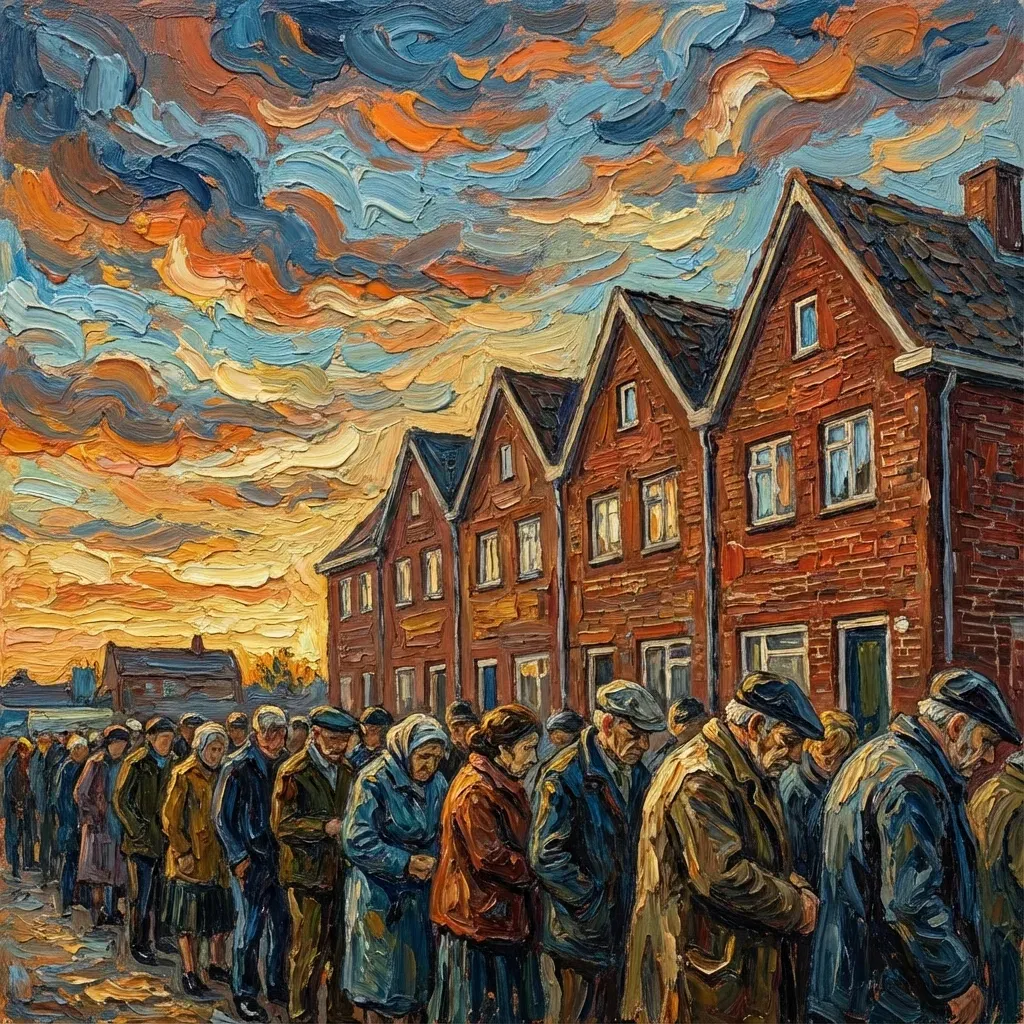
You have gathered all your documents. You have successfully registered with the local housing distribution platform. You pay your annual subscription fee perfectly on time, every single year. You have patiently waited months. Then those months turned into years. Yet, whenever you log in to check your ranking for a suitable social housing apartment, you are still positioned at number 850 in the queue.
Sound painfully familiar? You are incredibly far from being alone. This scenario represents the harsh everyday reality for hundreds of thousands of people desperately attempting to secure social housing in the Netherlands. The Dutch social housing system, while fundamentally designed as a sturdy safety net to protect vulnerable groups from volatile market forces, has effectively morphed into a frozen waiting game that spans over a decade in major metropolitan areas.
If you are profoundly exhausted from being permanently stuck on endless lists, it is time to reassess your strategy. Passively waiting for the system to eventually select you is no longer a viable housing plan. In this deeply comprehensive guide, we will unpack exactly how long the waitlines truly are across different Dutch cities, clarify the myth of the “urgency declaration,” and dive into highly actionable, realistic alternative housing sectors you can pivot towards right now.
Understanding the Social Housing System (Sociale Huur)
Before devising an escape strategy, it is critical to understand the precise mechanics of the beast you are dealing with. In the Netherlands, sociale huurwoningen (social rental homes) are government-subsidized properties strictly managed by non-profit housing associations (woningcorporaties).
Because these homes are subsidized, they offer tremendous benefits. The maximum basic rent (kale huur) is legally capped by the government, which in 2026 sits just below the 880 euro threshold. Furthermore, annual rent increases are strictly regulated by national law, and tenants enjoy incredibly robust eviction protections. Naturally, to qualify for a home at this highly protected price point, strict income limits apply. If your collective household income breaches the legal maximum threshold, you are simply deemed ineligible for social housing, regardless of how long you have been registered on the waiting list.
The fatal flaw in the system is not the design, but the math. The demand for these highly protected, affordable homes eclipses the available supply by staggering, catastrophic margins.
The Hard Numbers: Wait Times by Dutch City
Housing associations often speak in averages, but the localized reality is much starker. The waiting time required to actually sign a contract for a social housing unit varies violently depending on your target municipality.
It is crucial to understand that simply being registered for ten years does not guarantee a home. Many regional systems operate on “search time” (zoektijd) or “registration time” (inschrijfduur). The longer you are registered, the higher you climb when responding to a specific listing.
Here is what the extreme waiting times look like across major Dutch urban centers as of recent data:
- Greater Amsterdam Region: Prepare for a punishing wait. The average active seeker in Amsterdam waits between 13 and 15 years before securing a property. For highly desirable neighborhoods within the A10 ring, this can stretch toward 18 years.
- Utrecht: Similarly brutal to Amsterdam, Utrecht currently forces applicants to accumulate roughly 11 to 13 years of registration time.
- The Hague and Rotterdam: While slightly more forgiving than the capital, seekers here still face aggressive waiting periods averaging between 7 and 9 years for a standard apartment.
- Medium-Sized Cities (e.g., Eindhoven, Arnhem, Nijmegen): The situation cools down marginally, but you can still anticipate a waiting period spanning 5 to 7 years.
- Rural Provinces (Zeeland, Flevoland, parts of Limburg): Only here do wait times drop to somewhat realistic levels of 1 to 3 years, provided you are targeting smaller villages rather than the provincial capitals.
With timelines stretching over a decade in economic hubs, a young professional registering today will likely completely age out of their current lifestyle or income bracket before their number is finally called.
The Myth of the Urgency Declaration (Urgentieverklaring)
When faced with a sudden eviction or a devastating life event, many people immediately rush to apply for an urgentieverklaring (urgency declaration). An urgency declaration is a highly specific legal document issued by an independent municipal committee that effectively allows you to skip the entire multi-year waiting list and jump straight to the absolute front of the line.
Because the power of pulling rank is so immense, municipalities have locked the urgency system behind nearly impenetrable criteria. A common misconception among expats and locals alike is that a standard divorce, an expiring temporary rental contract, or having a baby while living in a small studio qualifies as an emergency. It does not.
To obtain an urgency declaration, you must prove that you find yourself in an acute, catastrophic life-threatening emergency that you did absolutely nothing to cause, and that a new social rental home is the only mathematically possible solution.
Examples of valid urgency criteria typically include:
- Fleeing from heavily documented and police-reported domestic violence.
- Having your current home suddenly rendered entirely uninhabitable by a sudden violent disaster (like a major fire or catastrophic flooding).
- Suffering from a severe, newly diagnosed medical or psychological condition that is objectively and disastrously worsened by your exact current living space (e.g., being confined to a wheelchair while living on the fourth floor of a building without an elevator).
Even if you meet these extreme criteria, the process requires immense documentation, psychological evaluations, and months of bureaucratic processing. If your problem is simply that the private sector is too expensive, your urgency application will be summarily rejected.
Actionable Alternatives While Waiting
If the social housing line is moving too slowly, and you do not qualify for an extreme urgency bypass, you must take control of your housing destiny. Waiting does not mean doing nothing. You must actively pivot your search toward viable alternative sectors within the Dutch real estate network.
1. Target the “Middenhuur” (Mid-Market Rent) Sector
The biggest gap in the Dutch housing market lies precisely between the intensely regulated social sector and the explosively expensive luxury private sector. To bridge this gap, the government and institutional investors have heavily prioritized building and regulating a specific category called Middenhuur (mid-market rent).
Middenhuur properties are typically priced directly above the social housing boundary, usually ranging between roughly 880 euros and 1,200 euros per month. Unlike social housing, you do not need 15 years of registration time to secure these properties. They are distributed primarily based on direct income checks (usually requiring a gross monthly income of 3.5 to 4 times the rent) and randomized lotteries or first-come, first-served mechanics managed directly by the building developers or pension funds that own them.
If your income has recently grown past the social housing limit, pivoting your entire search strategy toward localized institutional mid-market projects is the smartest tactical move you can make.
2. Enter the Vrije Sector (Private Rental Market)
Yes, the vrije sector (free or private rental sector) is undeniably more expensive. Rents are entirely determined by pure market forces, meaning landlords can essentially ask whatever the current market is willing to tolerate. However, the distinct advantage of the private sector is immediate speed and total flexibility.
Platforms like Huisly are specifically designed to help you scan the entire private market intelligently. By simultaneously pulling data from Funda, Pararius, and localized independent brokers, an aggregator ensures you never miss a niche listing.
To survive the private market without going bankrupt, employ strict search filters. Look for older apartments that lack recent luxury renovations, or pivot toward ground-floor units without balconies, as these typically command lower asking prices. Furthermore, utilizing an aggregator allows you to act the precise minute a property goes live, which is critical in a sector where highly desirable apartments receive fifty viewing requests within the very first hour.
3. Embrace Anti-Squat Housing (Antikraak)
If you are currently single, highly flexible, and do not mind living with extreme temporary uncertainty, antikraak (anti-squat) housing is an incredible financial hack.
In the Netherlands, property owners aggressively try to prevent empty buildings from being illegally squatted. To protect their assets, they hand over vacant properties (from empty schools and abandoned office blocks to old farmhouses slated for demolition) to specialized anti-squat agencies. These agencies then place highly vetted, flexible residents in the buildings.
You pay a negligible monthly fee - sometimes as agonizingly low as 150 to 250 euros a month including utilities. You gain massive amounts of square footage. However, the catch is massive: you possess absolutely zero formal tenant rights. The agency can serve you a legally binding eviction notice giving you a mere exactly 28 days to pack your entire life and vacate the premises completely. If you are adventurous, anti-squat allows you to save massive amounts of capital while maintaining your social housing registration in the background.
4. Consider Co-Living and House Sharing
The Dutch concept of woningdelen (house sharing) is no longer exclusively reserved for university freshmen. Due to extreme market pressures, young professionals in their late twenties and early thirties are increasingly forming residential cooperatives to share the financial burden of large private sector apartments.
Renting a massive 120-square-meter apartment on the private market for 2,400 euros is impossible alone. Splitting that exact same cost securely among three independent working professionals makes it manageable. Be highly aware, however, that Dutch municipalities heavily enforce localized permit regulations regarding how many unregistered adults may officially register at a single address. Ensure the landlord explicitly holds a valid omzettingsvergunning (conversion permit) for shared living before you commit, or you risk heavy municipal fines and immediate eviction.
Expand Your Search Geographically
The desire to live directly inside the historic canal rings of Amsterdam or adjacent to the Dom Tower in Utrecht is the exact metric causing your massive wait times.
The Dutch train network (NS) is an engineering marvel. It is entirely possible to live in an incredibly beautiful, safe, and heavily subsidized alternative city and commute into Amsterdam Zuidas within forty minutes. If you shift your social housing registration to municipalities operating outside the hyper-competitive Randstad core-such as aiming toward Almere, Lelystad, Purmerend, or towns deeper into Gelderland-you will witness the required registration wait times plummet from fifteen years down to three years or less.
Conclusion: Take Action Today
Social housing is an incredible financial safety net that offers unparalleled rental security. If you mathematically qualify for it, you should absolutely remain registered, meticulously maintain your profile, and rigorously ensure your annual subscription is paid. Letting a decade of accumulated points expire due to a missed ten-euro invoice is a catastrophic mistake.
However, you fundamentally cannot place your life on pause waiting for a bureaucratic system to miraculously solve your immediate housing needs. A 15-year waitlist is functionally useless if you are facing eviction next month.
Explore the emerging Middenhuur sector, utilize advanced aggregator tools like Huisly to snipe private market deals the second they appear, or dive into the adventurous world of anti-squat living if your lifestyle permits. You have robust, diverse alternatives immediately available to you in the Netherlands. You just need to stop waiting, step out of the centralized system, and start searching proactively.
For more detailed strategies on securing your ideal home, explore our comprehensive housing search workflow.
Frequently Asked Questions
What is the waiting time for social housing in Amsterdam?
The average waiting time for social housing in Amsterdam is currently between 13 and 15 years, depending on the specific neighborhood and your accumulated points.
How can I get an urgentieverklaring (urgency declaration)?
An urgency declaration is only granted in extreme emergencies, such as severe medical conditions directly tied to your living situation, or escaping acute domestic violence.
What is Middenhuur in the Netherlands?
Middenhuur (mid-market rent) refers to rental properties priced just above the social housing limit (usually between 880 and 1,200 euros) aimed at middle-income earners who do not qualify for subsidies.

About Lena Rahimi
Marketing and research expert at Huisly. Lena combines data-driven insights with deep market knowledge to help home seekers navigate the Dutch real estate market.
Related Articles

Finding Social Housing in the Netherlands: Complete 2026 Guide
Struggling to find affordable social housing? Discover why waitlists are so long, exactly who qualifies in 2026, and actionable alternatives you can secure.
Read Article
All New Housing Rules for 2026: A Complete Guide for Renters and Buyers
Complete guide to 2026 Dutch housing law changes. Housing allowance, mortgages, rent increases, energy requirements and Amsterdam regulations explained.
Read Article
Dutch Address Registration: A Guide for Renters
Need to register your Dutch address (inschrijven)? Learn why the BRP is essential, the challenges tenants face, and how to avoid heavy municipal fines.
Read ArticleGet the Huisly App!
Download our app for the best experience, instant notifications, and exclusive features for renters and buyers in the Netherlands.
Download the App