

Netherlands Student Housing Crisis: A Survival Guide

The Harsh Reality of the Academic Housing Market
You have proudly received your acceptance letter from a prestigious Dutch university. Whether you are aiming for a master’s degree at the University of Amsterdam, technical engineering at TU Delft, or law at Utrecht University, the academic achievement is immense. However, a second, vastly more difficult test begins the exact moment you attempt to find a place to sleep.
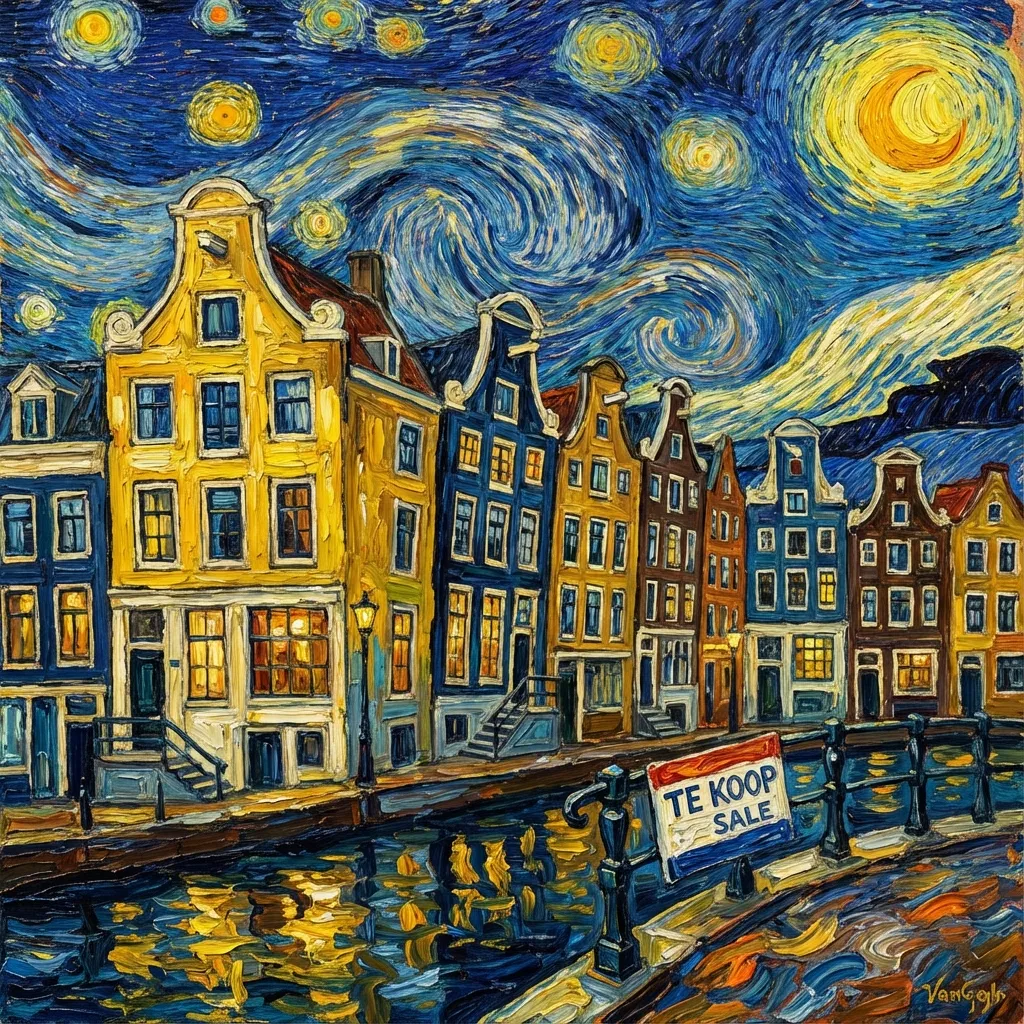
The shortage of student housing in the Netherlands is not simply an annoyance; it is a full-blown national crisis. It is a highly publicized, systemic failure of urban planning that has persisted and worsened over the last decade. Every single August, local news networks broadcast images of desperate international students living inside crowded emergency tent camps or bankrupting themselves by renting distant hotel rooms because they could not secure a standard student contract.
Universities themselves explicitly warn foreign students not to travel to the Netherlands if they have not formally secured housing by July. Understanding the mechanics of this deficit, and exactly how the specialized Dutch student housing infrastructure operates, is the only way to guarantee you do not become a statistical victim of the crisis.
1. The Anatomy of the Housing Deficit
To survive the search, you must first understand why the environment is so incredibly hostile. The student housing shortage is fueled by a convergence of overwhelming demand and heavily restricted supply.
The Explosion of International Enrollment
Dutch universities offer extremely high-quality education at a fraction of the cost of American or British institutions, and they offer hundreds of programs entirely in English. This has created a massive influx of international talent. However, the physical housing infrastructure of historical Dutch cities was never designed to absorb thousands of new inhabitants simultaneously every September.
The Eradication of the ‘Kamerverhuur’ Market
Historically, normal property investors would buy a large family home and slice it into four or five independent student rooms. In 2026, local municipalities have aggressively cracked down on this practice. Mayors argue that dividing family homes into dense student houses destroys the social cohesion of residential neighborhoods. Consequently, extreme permit requirements and heavy taxation have forced investors to sell these student houses, massively deleting available room supply from the total market pool.
2. Navigating the SSH and Institutional Providers
The foundational pillar of Dutch student housing revolves around massive, specialized non-profit corporations. The most famous is the SSH (Stichting Studenten Huisvesting), which dominates cities like Utrecht, Rotterdam, and Groningen. Similar organizations like DUWO operate heavily in Leiden, Delft, and Amsterdam.
Registration Time is Everything
These institutional providers offer the safest, most affordable, and most reliable student rooms in the country. Because the rent is strictly regulated, a room via SSH is easily hundreds of euros cheaper than renting from a private commercial landlord.
However, they operate strictly on accumulated waiting times. You register at the platform, pay a small registration fee, and you generate “waiting time.” When a room becomes available, the student who responds with the longest mathematical waiting time wins the room.
For highly popular cities like Utrecht, the required waiting time to secure a basic room regularly exceeds thirty or forty months. If you are an international student, you must register for these platforms years in advance, or instantly seek alternative commercial routes.
The Short Stay Exception for Internationals
Universities understand that foreign students cannot wait three years for a room. Therefore, universities often reserve a specific block of “Reserved Accommodation” or “Short Stay” rooms specifically for first-year international arrivals. These are fully furnished rooms granted on a first-come, first-served basis. If your university offers this, you must accept it immediately. It is a temporary landing pad that gives you a critical twelve-month window to find permanent housing locally.
If you miss this window, you must prepare for the private sector and learn exactly how to avoid rental scams targeted at desperate students.
3. The Cultural Phenomenon of ‘Hospiteren’
If you do not possess four years of registered waiting time, you must enter the arena of the existing student house. When a tenant leaves a shared house (often consisting of four to eight students), the remaining housemates possess the absolute right to legally choose their new roommate. They organize a highly specific Dutch ritual known as the ‘Hospiteeravond’ (Hospitation Evening).
The Mechanics of the Interview
The housemates will post the empty room on a platform or a Facebook group. They will receive hundreds of messages. They will select roughly ten to twenty applicants and invite them to the house for an evening of intense, rapid-fire social interviews.
You will sit in a crowded living room and answer questions about your hobbies, your cleaning habits, your cooking skills, and your personality. It functions exactly like a high-speed corporate networking event or a fraternity rush.
How to Dominate a Hospiteeravond
- Write a Flawless Introduction: Do not send a generic “I am interested” message. Write a vibrant, highly personalized paragraph outlining exactly who you are, what you study, and what you bring to the social dynamic of the house.
- Be Assertive, Not Arrogant: During the evening, you must speak up and engage the housemates. If you sit quietly in the corner, you will be instantly forgotten.
- Acknowledge the Language Barrier: Many Dutch student houses (often labeled “No Internationals” or “Dutch Only” in listings) prefer local speakers because it is their relaxing home environment. If you find an international-friendly house, highlight your eagerness to learn basic Dutch phrases and cook international meals.
4. The Rules of Huurtoeslag (Housing Allowance)
The absolute greatest financial weapon available to students is the Dutch government’s rent subsidy program, known as Huurtoeslag. Under specific parameters, the tax authority (Belastingdienst) will physically deposit hundreds of euros into your bank account every month to subsidize your rent.
However, the legal parameters are notoriously strict and deeply misunderstood.
The Self-Contained Requirement
To qualify for Huurtoeslag in 2026, you must strictly rent an “independent” or “self-contained” (zelfstandig) living space. The government defines this explicitly. Your apartment must have its own private, lockable front door from the outside or a shared hallway. Inside your specific unit, you must possess a completely private cooking space with water and drainage, and your own private flushing toilet.
If you share a bathroom or a kitchen with a single other student down the hall, your room is classified as “unself-contained” (onzelfstandig) and you are instantly disqualified from receiving any financial subsidy.
The Age and Income Caps
Even if the room is fully independent, your base rent must fall below a specific mathematical ceiling (usually hovering around 879 euros, although limits change annually). Furthermore, if you are under 23 years old, the rent ceiling is significantly lower, making it mathematically impossible for very young students to claim allowance on mid-tier studios.
If you are an expat researcher or student relying on subsidies, make absolutely certain you deeply study our specific breakdown regarding Huurtoeslag eligibility traps.
5. Winning the Fight with Advanced Aggregation
Searching for student housing transforms into a chaotic nightmare because listings are scattered wildly across thirty different unverified Facebook groups, specialized student portals, university forums, and premium commercial makelaar websites. Monitoring all of them manually is a surefire path to exhaustion.
By deploying a centralized aggregator platform like Huisly, you bypass the scattered chaos. Huisly instantly pulls active, verified listings from all major national portals including Kamernet, Pararius, and Funda, stripping out the massive volume of fake listings generated by scammers targeting naive students.
You define your exact maximum student budget, your desired proximity to the university campus, and your furnishing requirements. Huisly algorithms hunt the market twenty-four hours a day, bypassing the noise and delivering only highly actionable, legitimate contracts directly to your dashboard.
Conclusion: Eradicate Desperation with Preparation
The Dutch student housing crisis is severe, but it is not completely unbeatable. The students who end up sleeping in emergency university camps are universally the students who began searching in late July. To secure your academic future, you must begin searching six months in advance. Register deeply with organizational giants like SSH immediately, prepare yourself for the unique cultural interview stress of the Hospiteeravond, deeply understand the financial constraints separating shared rooms from subsidized independent studios, and rely on centralized tech like Huisly to deliver clean, uncompromised intelligence to your phone.
Frequently Asked Questions
Is it genuinely hard to find student housing in the Netherlands?
Yes. Major university cities like Amsterdam, Utrecht, and Groningen face unprecedented housing deficits. Many international students are forced to sleep in hostels or abandon their studies entirely.
How much does a standard student room cost in reality?
A highly basic, unself-contained room in a shared student house typically costs between 450 and 750 euros per month depending heavily on the city. Private independent studios easily exceed 900 euros.
Can international students receive the Dutch housing allowance (Huurtoeslag)?
Yes, but strictly if you rent a 'self-contained' unit featuring its own private lockable front door, a private kitchen, and a private bathroom. Shared rooms are entirely ineligible.

About Lena Rahimi
Marketing and research expert at Huisly. Lena combines data-driven insights with deep market knowledge to help home seekers navigate the Dutch real estate market.
Related Articles
All New Housing Rules for 2026: A Complete Guide for Renters and Buyers
Complete guide to 2026 Dutch housing law changes. Housing allowance, mortgages, rent increases, energy requirements and Amsterdam regulations explained.
Read Article
Dutch Address Registration: A Guide for Renters
Need to register your Dutch address (inschrijven)? Learn why the BRP is essential, the challenges tenants face, and how to avoid heavy municipal fines.
Read Article
Dutch Housing Registration Problems: An Expat Guide
Why is it so hard to find housing in the Netherlands that allows BSN registration? Learn about illegal subletting, municipal fines, and actionable workarounds.
Read ArticleGet the Huisly App!
Download our app for the best experience, instant notifications, and exclusive features for renters and buyers in the Netherlands.
Download the App